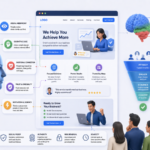

One of the most common goals in digital marketing is increasing website traffic. Businesses invest in search engine optimization, paid advertising, social media campaigns, and content marketing with the expectation that more visitors will naturally lead to more sales. While traffic is important, it is not always the metric that deserves the most attention. Companies looking to improve their online performance often explore resources from https://www.kesato.com/ to better understand how digital marketing strategies can contribute to measurable business growth.
Over the years, I have noticed a recurring pattern across businesses of all sizes. Many celebrate rising traffic numbers while overlooking a much more important question: are those visitors actually becoming customers?
The reality is that traffic alone does not generate revenue. A website can attract thousands of visitors every month and still struggle to produce meaningful business results. What matters is how effectively those visitors move through the customer journey and whether they eventually take action.
The Obsession With Traffic Metrics
Traffic is one of the easiest marketing metrics to track. Platforms such as Google Analytics provide detailed reports showing how many users visit a website, where they come from, and which pages they view.
Because traffic numbers are highly visible, they often become the primary indicator of marketing success. Business owners may feel encouraged when traffic increases by 20 or 30 percent, assuming that growth automatically translates into improved performance.
However, traffic is only one part of the equation.
A website attracting 1,000 highly qualified visitors can often outperform a website attracting 10,000 visitors with little interest in its products or services. Without understanding visitor quality and conversion behavior, traffic metrics can create a false sense of progress.
Understanding the Difference Between Traffic and Intent
Not every visitor arrives with the same purpose.
Some users are researching a topic, some are comparing solutions, and others are actively looking for a provider. These differences in intent significantly influence conversion potential.
For example, someone searching for educational information may spend several minutes reading a blog article but have no immediate intention of making a purchase. In contrast, a visitor searching for specific services may already be close to making a decision.
This is why understanding search intent is critical.
Businesses that attract visitors with strong commercial intent often generate better results than those focused solely on increasing visitor volume. The quality of traffic frequently matters far more than the quantity.
Why Conversion Rates Matter More
A conversion occurs when a visitor completes a desired action. Depending on the business model, this could include:
- Submitting an inquiry form
- Booking a consultation
- Downloading a guide
- Joining an email list
- Completing a purchase
The percentage of visitors who take these actions is known as the conversion rate.
Conversion rates provide a much clearer picture of marketing effectiveness than traffic numbers alone. A business that improves its conversion rate from two percent to four percent effectively doubles its results without increasing traffic.
This is one reason experienced marketers often focus heavily on conversion optimization. Improving what happens after a visitor arrives can generate greater returns than investing heavily in acquiring additional traffic.
The Hidden Cost of Poor Website Experiences
Many businesses assume that traffic generation is the hardest part of digital marketing. In reality, converting visitors is often the bigger challenge.
A poorly designed website can undermine even the most successful marketing campaigns.
Common issues include:
- Slow page loading times
- Confusing navigation
- Weak calls to action
- Poor mobile experiences
- Unclear messaging
When visitors encounter these obstacles, they often leave without engaging further.
I have seen businesses spend significant budgets on advertising only to discover that their website experience was preventing conversions. In these situations, increasing traffic simply increases the number of missed opportunities.
Why Customer Journeys Are Rarely Linear
One reason businesses struggle to connect traffic with revenue is that customer journeys have become increasingly complex.
Modern consumers rarely convert after a single interaction. They often discover a brand through one channel, continue researching through another, and return multiple times before making a decision.
A typical customer journey may include:
- Discovering a business through Google Search
- Reading educational content
- Following social media channels
- Comparing competitors
- Returning through remarketing campaigns
- Submitting an inquiry
Because of this behavior, businesses need to evaluate marketing performance across the entire customer journey rather than focusing on individual traffic sources.
Content Alone Is Not Enough
Content marketing remains one of the most effective ways to attract organic traffic. However, attracting readers and generating customers are two different objectives.
Many businesses create content that ranks well but fails to move visitors closer to conversion.
Effective content should do more than generate page views. It should guide readers toward meaningful actions while helping them solve problems and evaluate solutions.
Companies such as Kesato understand that successful content strategies require a balance between visibility and business outcomes. Generating traffic is valuable, but generating qualified opportunities is what ultimately drives growth.
The Role of Conversion Optimization
Conversion optimization focuses on improving the percentage of visitors who take desired actions.
This process often involves testing and improving elements such as:
- Headlines
- Calls to action
- Landing page layouts
- Contact forms
- User experience
- Mobile usability
Small improvements can have a significant impact.
For example, increasing a conversion rate from three percent to four percent may appear minor, but it can represent a substantial increase in leads and revenue over time.
Businesses that consistently optimize conversions often outperform competitors even when traffic levels remain similar.
Why Data Should Guide Decisions
One of the biggest mistakes businesses make is assuming they understand why visitors are not converting.
Without data, these assumptions can be misleading.
Analytics tools provide valuable insights into user behavior. Businesses can identify which pages perform well, where users leave the website, and which channels generate the highest quality traffic.
Data driven decision making allows organizations to focus on the areas that will produce the greatest impact.
Kesato has built its approach around helping businesses combine strategy, creative execution, and performance analysis. This reflects a broader trend within digital marketing, where data plays an increasingly important role in driving business outcomes.
Looking Beyond Vanity Metrics
Vanity metrics often create the illusion of success.
High traffic numbers, social media engagement, and impressions may look impressive in reports, but they do not always indicate business growth.
Businesses should focus on metrics that directly influence outcomes, including:
- Conversion rates
- Cost per acquisition
- Qualified leads
- Revenue contribution
- Customer lifetime value
These indicators provide a clearer understanding of marketing effectiveness and support more informed decision making.
When evaluated together, they offer a much more accurate picture of performance than traffic alone.
Creating a Balanced Marketing Strategy
The most effective marketing strategies balance traffic generation with conversion optimization.
Traffic remains important because businesses need visibility to attract potential customers. However, visibility should not become the sole objective.
A balanced approach includes:
- Attracting qualified visitors
- Improving user experiences
- Optimizing conversion paths
- Measuring performance accurately
- Continuously refining strategies
This combination helps ensure that marketing investments contribute to meaningful business outcomes rather than simply increasing website activity.
Conclusion
More traffic can create opportunities, but opportunities alone do not generate revenue. Businesses that focus exclusively on visitor numbers often overlook the factors that have the greatest impact on growth.
Understanding customer intent, improving website experiences, optimizing conversions, and analyzing performance data are often more valuable than simply increasing traffic volumes.
Throughout my experience observing digital marketing performance, I have found that successful businesses rarely measure success by traffic alone. Instead, they focus on how effectively traffic is converted into leads, customers, and long term business value.
Companies such as Kesato recognize that sustainable growth comes from combining visibility with performance. In today’s competitive digital environment, that balance often determines whether marketing efforts produce meaningful results or simply generate more visitors.