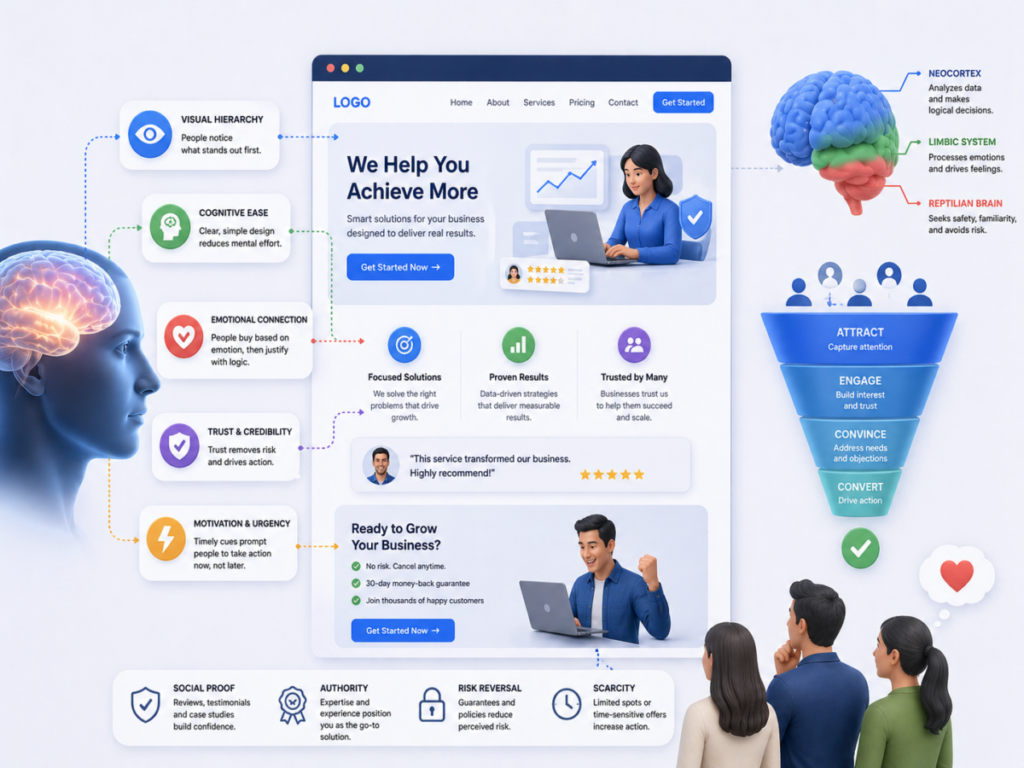

In today’s digital landscape, high performing websites are not simply the result of attractive design or advanced technology. From what I have observed while analyzing various industries, the most effective websites are built on a deep understanding of human psychology. Every interaction, visual element, and piece of content is intentionally crafted to influence how users think, feel, and respond.
As a writer who closely follows digital behavior trends, I have noticed that successful websites are not necessarily the most complex ones. Instead, they are the ones that feel intuitive and effortless. This is because they align with how people naturally process information. When a website matches user expectations, it creates a seamless experience that encourages engagement and trust.
Understanding User Psychology in Digital Spaces
When users land on a website, they do not carefully analyze every detail. Instead, they rely on instinct and past experiences to guide their behavior. This process happens quickly and often subconsciously.
From my perspective, this is where many businesses struggle. They tend to focus on what they want to communicate rather than how users interpret that information. High performing websites take a different approach. They are designed around user behavior, ensuring that every interaction feels natural and predictable.
By understanding how users think, businesses can create experiences that reduce friction and improve engagement. This is the foundation of effective digital strategy.
First Impressions and Cognitive Bias
First impressions are formed within seconds, and they are incredibly difficult to change. During this short moment, users rely on cognitive biases to evaluate whether a website is trustworthy and relevant.
For example, users often associate clean and modern design with professionalism. They also feel more comfortable with familiar layouts because they require less effort to navigate. From what I have seen, websites that follow these patterns tend to perform better.
A strong first impression creates a sense of confidence. When users feel comfortable immediately, they are more likely to continue exploring the website and eventually take action.
Visual Hierarchy and Attention Flow
Visual hierarchy is one of the most important elements of effective web design. It determines how users interact with content and where their attention is directed.
High performing websites guide users through a clear path. Headlines capture attention first, followed by supporting information and calls to action. This structured approach makes it easier for users to understand what to do next.
In my observations, websites without a clear hierarchy often feel overwhelming. Users may struggle to find important information, leading to frustration. A well organized layout removes this barrier and improves the overall experience.
The Role of Trust and Credibility Signals
Trust is a critical factor in online decision making. Without it, even the most visually appealing website will struggle to convert visitors into customers.
Credibility signals play an important role in building this trust. These include testimonials, secure payment indicators, professional design, and transparent messaging.
From what I have seen, users are constantly looking for reassurance. They want to feel confident before making a decision. High performing websites make this process easier by clearly demonstrating reliability and authenticity.
Emotional Design and User Engagement
Emotion is a powerful driver of user behavior. The way a website looks and feels can significantly influence how users interact with it.
Colors, images, and tone all contribute to emotional perception. A warm and inviting design can create comfort, while a bold and modern aesthetic can convey confidence and innovation.
From my experience, websites that successfully evoke positive emotions tend to have higher engagement rates. Users are more likely to stay longer, explore further, and remember the experience.
Decision Making and Simplicity
One of the most common reasons users leave a website is confusion. When faced with too many options or complex navigation, users often choose to exit rather than decide.
This is why simplicity is essential. High performing websites reduce unnecessary elements and focus on clarity. Clear calls to action and straightforward navigation make it easier for users to take the next step.
From what I have observed, simplifying the user journey can have a significant impact on conversion rates. It removes friction and allows users to act with confidence.
The Power of Social Proof
Social proof is a highly effective psychological trigger. People naturally look to others when making decisions, especially in uncertain situations.
Reviews, testimonials, and user generated content all contribute to building trust. When users see that others have had positive experiences, they are more likely to feel confident in their decision.
High performing websites strategically place social proof where it matters most. This reinforces trust at critical points in the user journey.
Read also : Build a Website That Drives Traffic and Conversions
Behavioral Triggers and Conversion Optimization
Behavioral triggers are subtle elements that encourage users to take action. These include urgency, scarcity, and clear value propositions.
For example, limited time offers can create a sense of urgency, while highlighting benefits can make a product more appealing. These techniques work because they align with how people naturally make decisions.
From my observations, the most effective websites use these triggers carefully. They guide users without creating pressure, resulting in a more positive experience.
Long Term Impact of Psychological Design
What many businesses fail to realize is that psychological design does not only affect immediate conversions. It also influences long term brand perception.
Websites that consistently deliver positive experiences build trust over time. This leads to stronger customer relationships, higher retention rates, and increased loyalty.
From what I have seen, businesses that invest in user psychology often achieve more sustainable growth. They are not just optimizing for short term results, but building a foundation for long term success.
Conclusion
The psychology behind high performing websites is rooted in understanding how people think, feel, and behave. Every element, from design to messaging, plays a role in shaping user perception.
As I have observed across various digital platforms, success comes from aligning strategy with human behavior. Websites that do this effectively are able to build trust, improve engagement, and drive meaningful results.
Ultimately, high performance is not just about technology. It is about creating experiences that feel natural, intuitive, and valuable. When businesses understand this, they can unlock the full potential of their digital presence.